Regional Infrastructure Gaps That Delay Live Baseball and Boxing Feeds for Viewers in Secondary Cities Across Multiple Continents
Written by Jonas Patterson · May 26, 2026
Regional Infrastructure Gaps That Delay Live Baseball and Boxing Feeds for Viewers in Secondary Cities Across Multiple Continents
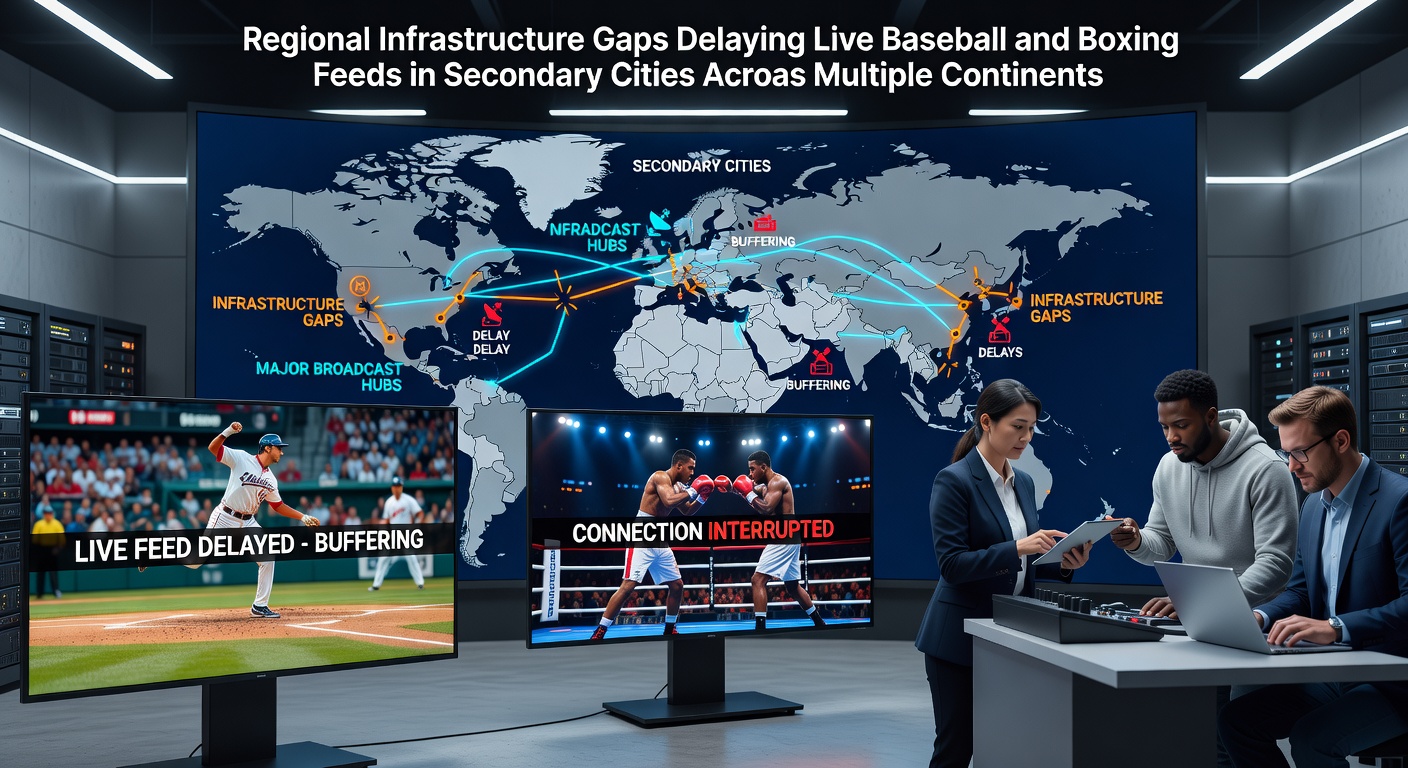
Secondary cities in regions spanning Africa, Asia, and Latin America experience consistent delays in live baseball and boxing transmissions because of uneven broadband deployment and outdated transmission networks that fail to match the demands of high-bitrate video streams. Data from international monitoring bodies shows these gaps widen during peak event windows when multiple simultaneous feeds compete for limited capacity in areas outside primary urban centers.
Broadband Limitations in Emerging Markets
Many secondary cities across sub-Saharan Africa rely on microwave backhaul links rather than fiber optic connections which creates latency spikes that push baseball innings and boxing rounds behind real-time delivery by several minutes. Researchers at institutions in Kenya and Nigeria have documented how power fluctuations compound these issues since backup generators often cannot sustain continuous high-load operations needed for stable streaming servers. Viewers in places like Kisumu or Ibadan encounter buffering during critical moments because the underlying infrastructure prioritizes basic connectivity over the sustained throughput required for uninterrupted sports broadcasts.
Similar patterns appear in secondary cities of Southeast Asia where fiber penetration remains concentrated along coastal corridors while inland towns depend on satellite or 4G extensions that introduce variable packet loss. Reports compiled by the International Telecommunication Union indicate that average download speeds in these locations hover below thresholds necessary for 1080p live video which forces providers to downscale quality and still encounter interruptions during boxing title fights or baseball playoff games. The situation becomes pronounced when events overlap with local data usage peaks such as evening hours when residential and small business traffic surges simultaneously.
Challenges Across Latin American and North American Secondary Hubs
In Latin America observers have tracked comparable delays in cities such as Mendoza in Argentina and Cochabamba in Bolivia where national backbone networks have not kept pace with growing demand for international sports content. Transmission providers route feeds through centralized hubs that add hops and increase propagation delay particularly when baseball games originate from North American time zones and must cross multiple borders before reaching end users. Boxing events scheduled during regional festivals face additional strain because local networks allocate bandwidth first to emergency services and commercial traffic.
Even in North American secondary cities such as those in the American Midwest or Canadian prairies fiber-to-the-home deployments lag behind major metros which leaves residents dependent on cable or DSL connections that degrade under sustained high-definition loads. Government filings from the Federal Communications Commission highlight how spectrum allocation in rural zones restricts the number of concurrent high-bandwidth sessions that can operate without throttling. As of May 2026 several planned 5G small-cell expansions aim to address these shortfalls yet deployment timelines extend into subsequent years for many outlying communities.
Impact on Event Scheduling and Viewer Access
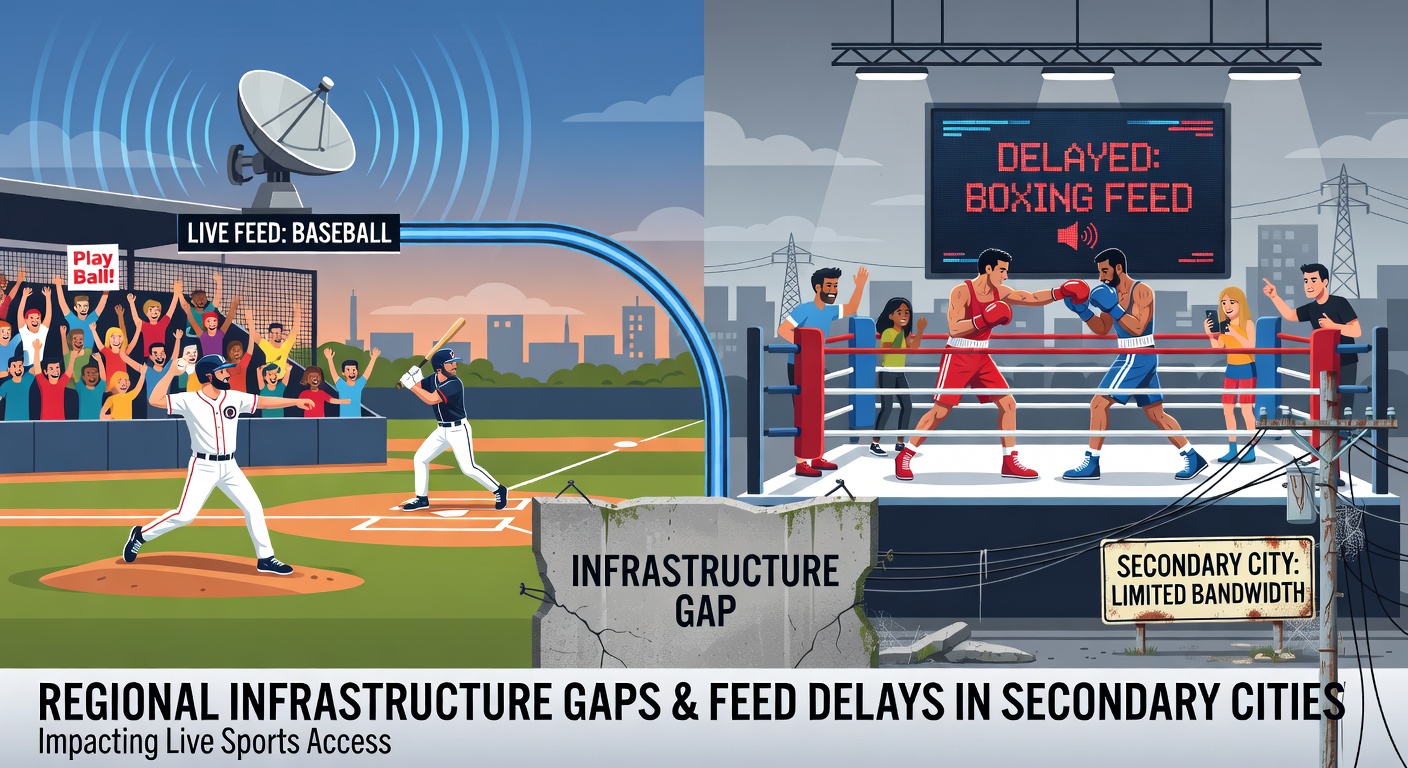
Event organizers adjust start times for international audiences yet these adjustments cannot compensate for last-mile delivery shortfalls that persist in secondary locations. Boxing promotions scheduled for prime-time windows in one continent often land during off-peak infrastructure availability elsewhere resulting in compounded delays when combined with baseball doubleheaders that require continuous bandwidth across extended durations. Data indicates that viewers in affected cities frequently resort to lower-resolution alternatives or delayed replays which alters the live experience and reduces engagement with real-time commentary and statistics overlays.
Network operators in these regions have introduced traffic prioritization protocols for licensed sports broadcasters but implementation remains inconsistent because regulatory frameworks differ by country and enforcement capacity varies. In some secondary cities local internet service providers apply fair-use policies that cap monthly data allowances which viewers exceed during lengthy baseball seasons or multi-fight boxing cards. Studies conducted by regional academic centers reveal that households in these areas allocate disproportionate portions of income toward data top-ups yet still encounter outages when storms damage above-ground cabling or when maintenance crews cannot reach remote transmission towers promptly.
Technological and Policy Responses Underway
Efforts to close these gaps include public-private partnerships that subsidize satellite backhaul upgrades and expand microwave link redundancy in targeted corridors. Several governments have allocated spectrum in mid-band frequencies specifically for broadcast and streaming applications which promises improved reliability for live sports in the coming years. Industry associations representing telecommunications providers have published technical guidelines that encourage standardized quality-of-service metrics tailored to live video traffic yet adoption rates differ across jurisdictions.
Academic analyses of pilot projects in secondary cities of India and Brazil demonstrate measurable reductions in latency when edge caching servers are deployed closer to population clusters. These servers store segments of baseball and boxing feeds locally which decreases the distance data must travel during high-demand periods. While results vary by terrain and population density the approach illustrates one pathway for mitigating infrastructure constraints without requiring full fiber replacement in every location.
Conclusion
Regional infrastructure disparities continue to shape access patterns for live baseball and boxing content in secondary cities worldwide with measurable effects on transmission timing and quality. Ongoing investments in fiber expansion satellite enhancements and spectrum management offer pathways toward more consistent delivery yet the pace of improvement remains tied to local economic conditions and policy coordination across multiple continents. Data compiled from regulatory filings and technical studies shows that addressing these gaps requires sustained attention to both backbone capacity and last-mile connectivity so that viewers outside primary hubs can experience events without systematic delays.