Peering Points and Playoffs: Tracing Data Paths for Live Coverage of Transatlantic Sporting Events
Written by Jonas Flores · Aug 25, 2026
Peering Points and Playoffs: Tracing Data Paths for Live Coverage of Transatlantic Sporting Events
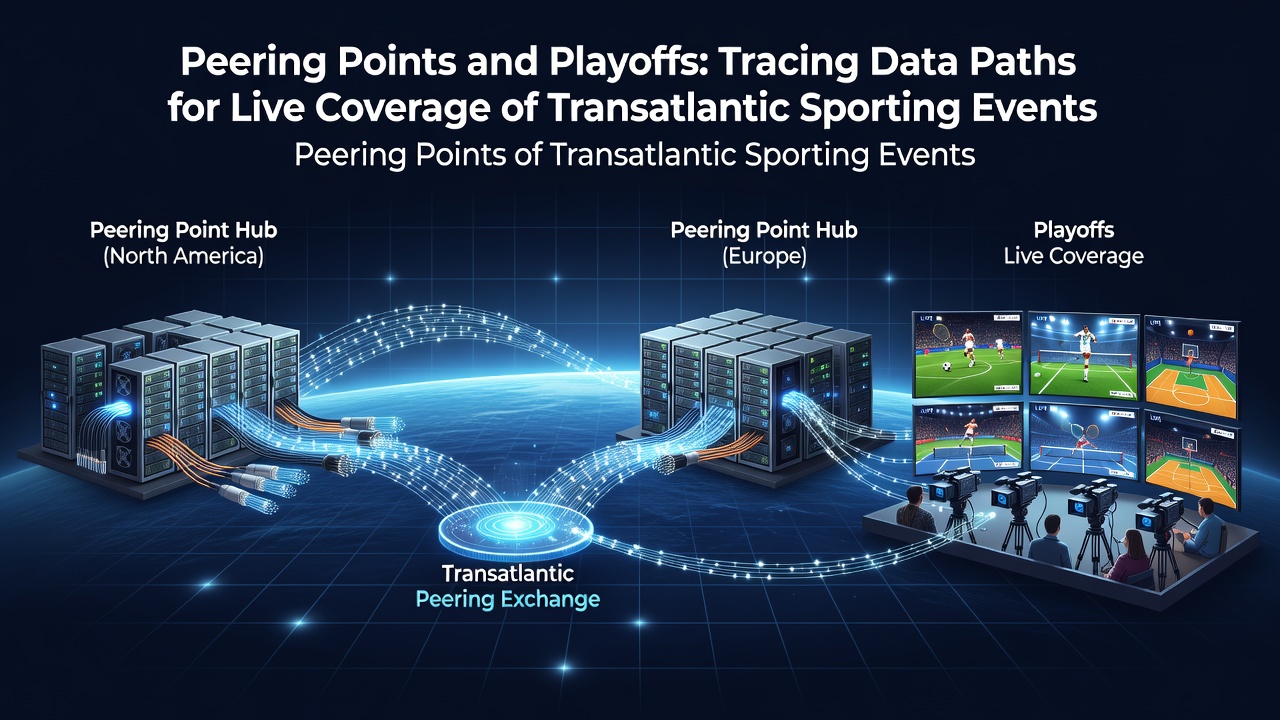
Live coverage of transatlantic sporting events depends on a network of peering points where internet service providers exchange traffic without payment, and observers note that these locations determine how video packets travel between continents during events such as NBA playoffs or European soccer leagues. Data originates at production facilities in one region and moves through submarine cables that cross the Atlantic before reaching distribution points on the opposite shore, while experts at major exchange facilities monitor latency to maintain synchronization for viewers.
Core Components of Peering Infrastructure
Peering points function as neutral meeting places where networks hand off packets at locations including New York, London, and Frankfurt, and researchers from the Internet Society have documented how these handoffs reduce transit costs for high-bandwidth streams. During peak periods, such as simultaneous baseball playoffs and cricket tests in August 2026, traffic volumes at these sites increase sharply because multiple broadcasters route live feeds through the same physical ports. Redundant routes exist through multiple cables, yet congestion at a single peering router can introduce jitter that affects frame delivery for remote audiences.
Equipment at these facilities includes high-capacity switches and route servers that advertise network prefixes, and data from RIPE NCC measurements shows that BGP announcements change dynamically when operators detect cable faults. For transatlantic events, production teams often establish private peering sessions with content delivery networks to bypass public exchange congestion, which allows direct fiber connections between origin servers and edge caches in target markets.
Submarine Cable Routes and Capacity Planning
Submarine cables form the physical backbone, with systems like MAREA and Dunant providing dedicated wavelengths for media traffic between Virginia Beach and Bilbao, while additional cables land in France and Ireland to diversify landing points. Capacity planners allocate spectrum months ahead of major tournaments, and records indicate that operators reserve 100-gigabit circuits specifically for uncompressed video feeds during events scheduled for August 2026. Maintenance windows are coordinated across operators so that simultaneous repairs do not overlap with live windows, although unexpected faults still require rapid rerouting through alternative cables.
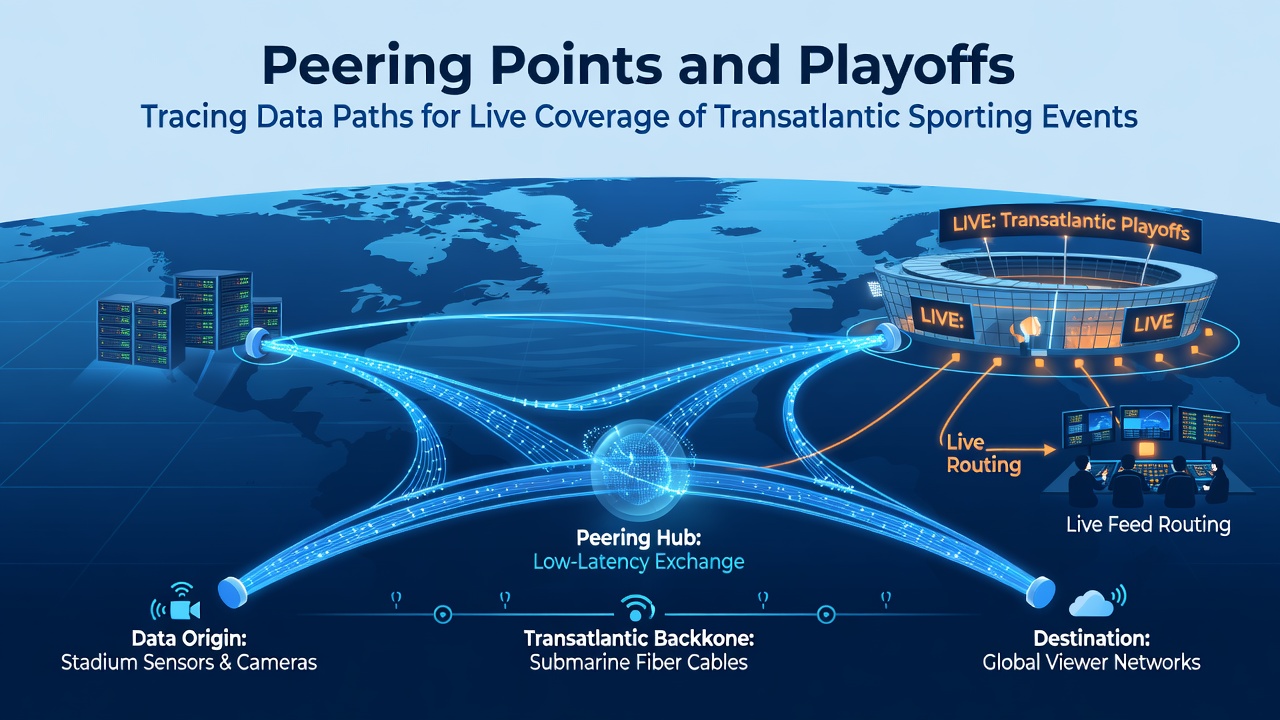
Those who study cable utilization report that video traffic accounts for the majority of eastbound capacity during North American evening hours when European audiences watch NBA games, and the same cables carry westbound soccer matches during afternoon slots in the United States. Latency on these routes averages under 70 milliseconds when traffic stays on direct paths, yet any detour through additional hops adds measurable delay that production teams must compensate for with buffering adjustments.
Routing Decisions During Live Events
Network operators adjust routing tables in real time when they observe packet loss on primary paths, and one documented case involved traffic from a UFC event shifting from a New York peering point to a Montreal facility after an undersea cable segment experienced elevated error rates. Content delivery networks maintain maps of optimal paths that update every few minutes, allowing streams to move between peering locations without interrupting viewer playback. During overlapping seasons, such as concurrent tennis majors and soccer derbies, these systems prioritize packets tagged with higher quality-of-service values to protect the most time-sensitive feeds.
Academic studies from institutions including the Technical University of Denmark have examined how anycast routing distributes requests across multiple transatlantic entry points, and their findings indicate that geographic distribution lowers average hop counts for viewers in secondary markets. Operators also deploy traffic engineering techniques that steer flows away from congested exchange points during known high-demand windows, which keeps jitter below thresholds that would cause visible artifacts on end-user devices.
Monitoring and Redundancy Measures
Monitoring platforms collect telemetry from routers at peering locations and from amplifiers along cable routes, generating alerts when optical signal-to-noise ratios drop below set limits. Redundancy protocols automatically switch wavelengths to backup fibers within milliseconds, and logs from past events confirm that such switches have preserved continuity during simultaneous baseball and basketball playoff coverage. European regulators have required reporting on cable diversity to ensure that no single point of failure can isolate an entire region from live feeds originating in North America.
Those responsible for broadcast operations maintain direct communication channels with both cable operators and exchange point managers so that capacity can be increased on short notice when viewership exceeds forecasts. Data collected during August 2026 events will provide further measurements on how well current peering arrangements scale under sustained high load.
Conclusion
Tracing data paths for transatlantic sporting events reveals a system built on peering points, submarine cables, and dynamic routing that together deliver synchronized video across oceans. Continued investment in diverse landing stations and monitoring tools supports reliable coverage even as event calendars grow denser, while measurements from industry and academic sources continue to inform capacity decisions ahead of future seasons.