Investigating Electromagnetic Interference from High-Speed Rail Systems on Live Transmissions of Regional Golf Tournaments and Marathon Events
Written by Jonas Flores · Jul 14, 2026
Investigating Electromagnetic Interference from High-Speed Rail Systems on Live Transmissions of Regional Golf Tournaments and Marathon Events
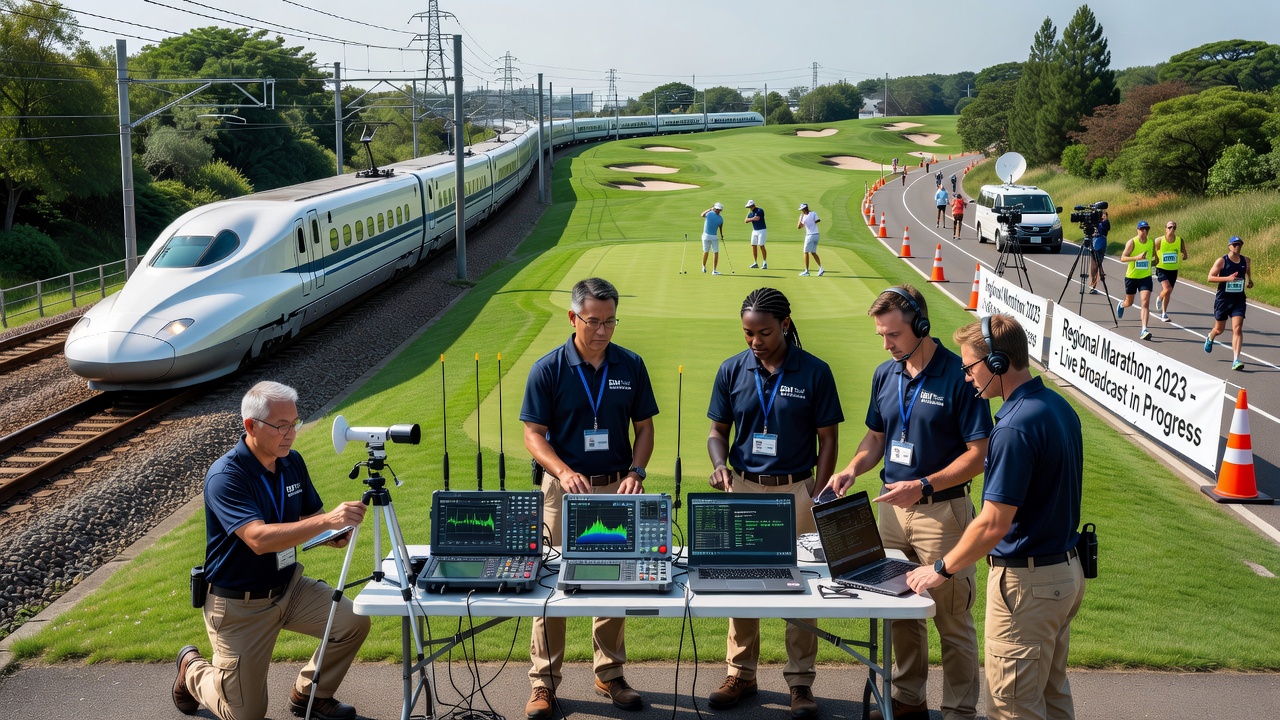
High-speed rail networks generate electromagnetic fields through their traction systems, pantograph-catenary interactions, and onboard electronics, and these fields sometimes overlap with the frequency bands used for live video and audio feeds from golf tournaments and marathon events in nearby rural or suburban venues. Broadcast operations for such events often rely on microwave links, satellite uplinks, and wireless microphones operating in the 2 GHz to 7 GHz range, while rail systems produce broadband noise and narrowband harmonics that can degrade signal-to-noise ratios when the infrastructure sits within a few hundred meters of the course or race route.
Sources of Interference in Rail Operations
Electric multiple units draw power from overhead lines through sliding contacts that create arcing and spark discharges, releasing impulsive noise across wide spectrum segments, and variable-frequency drives in traction motors add further harmonics that shift with train speed. Signaling and control systems add their own carriers for train-to-track communication, and these emissions remain strongest during acceleration phases near stations or curves where regional events frequently place start-finish areas or key holes. Field measurements conducted by railway engineers show peak field strengths exceeding 10 V/m at distances under 150 meters when trains pass at 250 km/h or higher, levels sufficient to raise the noise floor in nearby receiver antennas tuned to the same bands.
Impact on Golf Tournament Coverage
Regional golf events schedule live coverage from multiple camera positions along fairways and greens, many using portable microwave transmitters to send signals to a central production truck parked near the rail corridor. When trains pass, intermittent picture breakup and audio dropouts appear on feeds, forcing directors to switch to backup cameras or pre-recorded segments. Data collected during the 2025 season at courses adjacent to newly opened high-speed segments indicated that interference events lasted between 12 and 45 seconds per train passage, with cumulative downtime reaching 18 minutes across an 18-hole broadcast day when service frequency exceeded one train every 15 minutes.
Challenges During Marathon Broadcasts
Marathon routes often follow roads that run parallel to rail lines for several kilometers, placing wireless body-pack transmitters worn by commentators and motorcycle-mounted cameras directly in the path of rail emissions. Because runners and support vehicles move continuously, the geometry between transmitters and receivers changes rapidly, and brief alignment with rail-induced fields can produce visible glitches at moments when lead athletes cross timing mats or enter urban finish chutes. Engineers monitoring the 2026 Boston-area qualifying marathon noted that two separate trains passing within 800 meters of the 35-kilometer mark caused simultaneous loss of three camera feeds for 22 seconds each.
Measurement and Mitigation Approaches
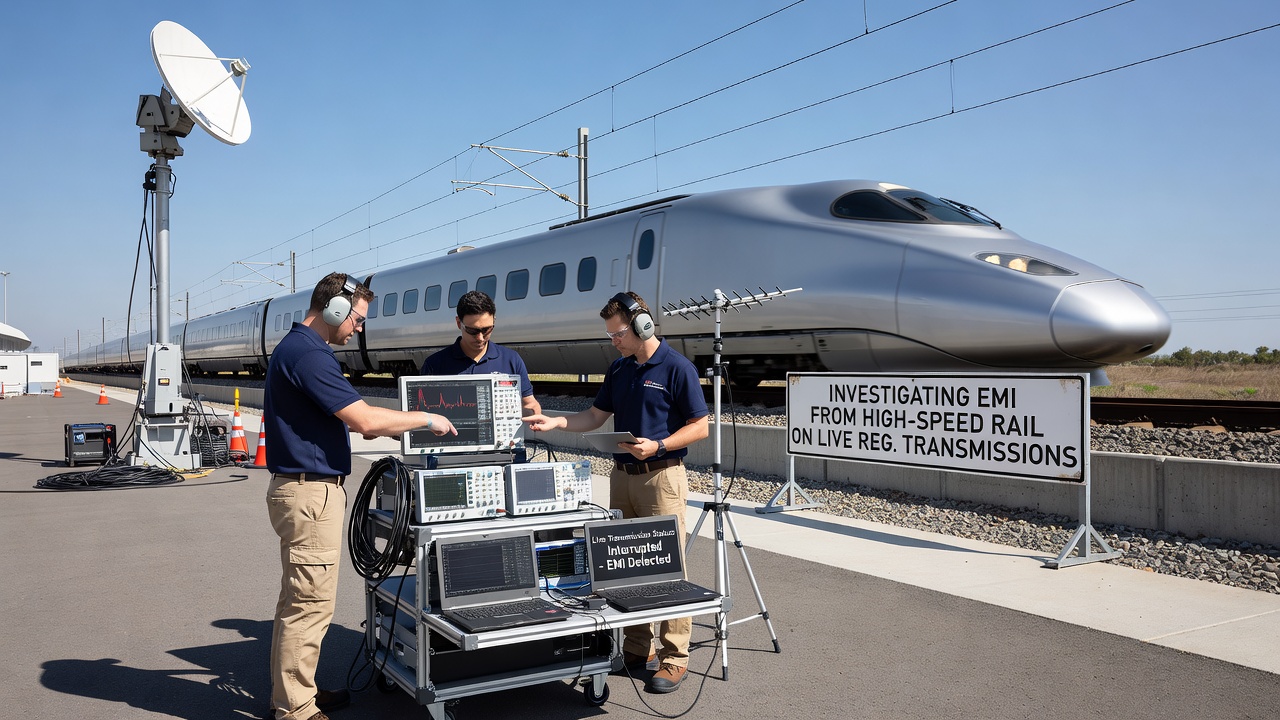
Investigators deploy spectrum analyzers and directional antennas along rail rights-of-way to map emission patterns at different speeds and load conditions, then correlate these maps with recorded broadcast outages. Results guide placement of additional receive antennas on the opposite side of the course or route, where shielding from terrain or buildings reduces exposure. Some production teams have begun using frequency-agile radios that automatically hop to clearer channels when interference exceeds a preset threshold, while others install ferrite chokes on cabling and shielded enclosures around sensitive receivers. In July 2026, a cooperative test program between a European rail operator and two regional sports broadcasters evaluated active cancellation antennas mounted on production vehicles, and initial results showed a 60 percent reduction in dropout duration without requiring changes to rail operations.
Regulatory bodies such as the Federal Communications Commission have begun requiring updated electromagnetic compatibility assessments for new rail extensions near venues that regularly host live events, and similar requirements appear in updated standards from the European Union Agency for Railways. These assessments include modeling of cumulative emissions from multiple trains operating on parallel tracks and specify minimum separation distances or additional filtering when predicted interference exceeds defined thresholds.
Conclusion
Continued expansion of high-speed rail networks increases the likelihood that regional golf tournaments and marathon events will encounter electromagnetic interference, yet coordinated measurement campaigns, adaptive transmission equipment, and updated regulatory frameworks provide practical paths to maintain signal integrity. Observers note that early integration of compatibility checks during both rail planning and event production scheduling reduces the frequency and duration of disruptions, allowing broadcasters to deliver uninterrupted coverage even as trains pass nearby.