Bandwidth Management Tactics That Stabilize Live NBA and Soccer Feeds During Peak Urban Congestion Periods
Written by Jonas Patterson · May 23, 2026
Bandwidth Management Tactics That Stabilize Live NBA and Soccer Feeds During Peak Urban Congestion Periods
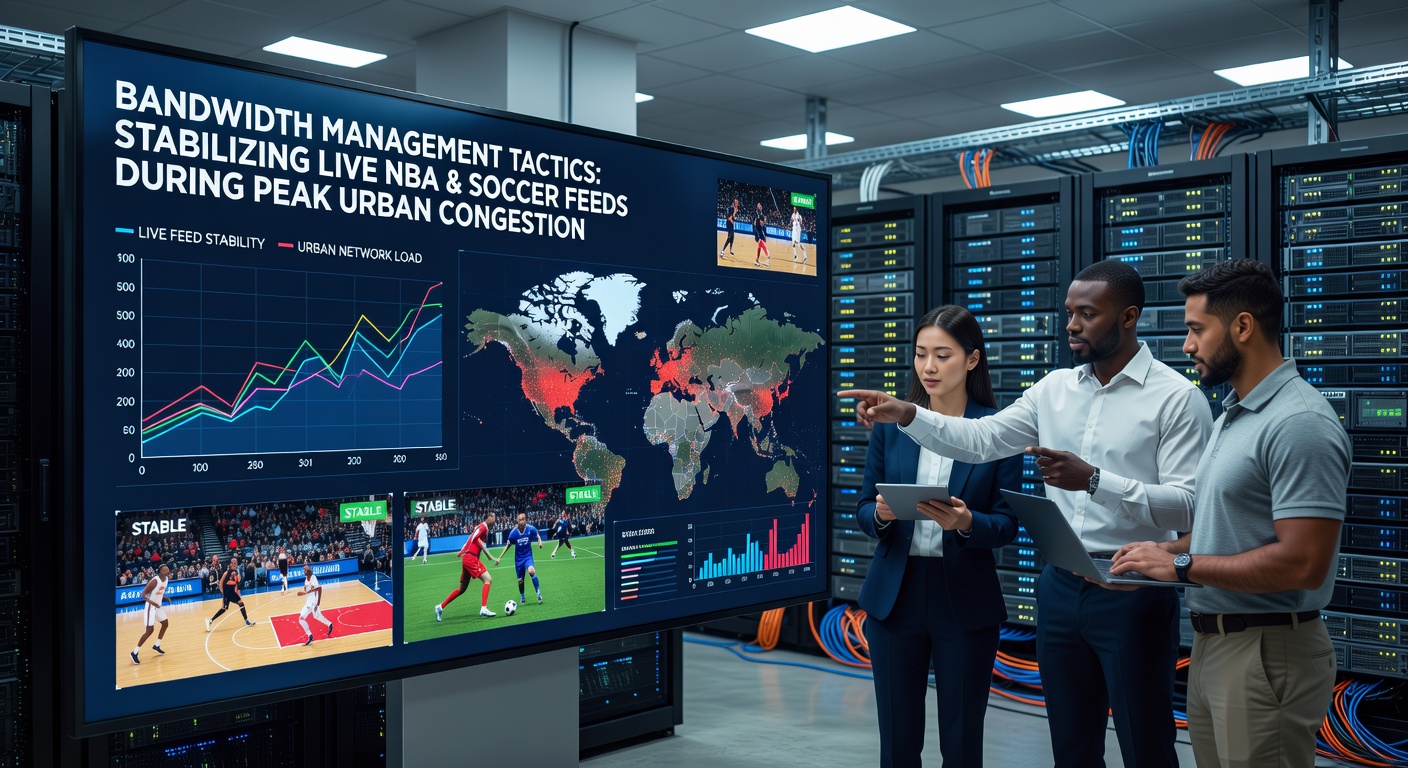
Urban areas experience significant spikes in network demand during major NBA and soccer events, particularly when multiple games overlap in evening hours, and bandwidth management tactics address these challenges through technical strategies that maintain feed stability. Cities with dense populations see simultaneous streaming requests from thousands of viewers per square kilometer, which strains local infrastructure during peak periods such as May 2026 when NBA conference finals coincide with European soccer league conclusions.
Adaptive bitrate streaming forms a core component of these tactics, where systems automatically adjust video quality based on available bandwidth at each viewer location. Providers implement protocols that detect congestion in real time and reduce resolution from 1080p to 720p or lower without interrupting playback, and this approach prevents total feed failures during high-traffic windows. Research from network engineering groups shows that such adjustments occur within milliseconds of congestion detection, keeping streams accessible across mobile and fixed connections.
Content Delivery Networks and Regional Routing
Content delivery networks distribute streams through edge servers positioned closer to end users, which reduces the distance data travels and alleviates pressure on central backbone routes. During congested periods operators reroute traffic dynamically to underutilized nodes, and this method proves effective in metropolitan zones where fiber optic capacity reaches limits. Observers note that NBA and soccer broadcasts benefit because these networks handle sudden viewer surges that occur when games enter overtime or extra time.
Quality of service protocols prioritize sports data packets over less time-sensitive traffic such as file downloads or social media updates, ensuring that live feeds maintain consistent packet delivery rates. Network operators configure routers to assign higher priority levels to UDP streams used in video delivery, and this configuration minimizes latency spikes that otherwise disrupt synchronization between audio and video elements.
Edge Computing Deployments in Dense Areas
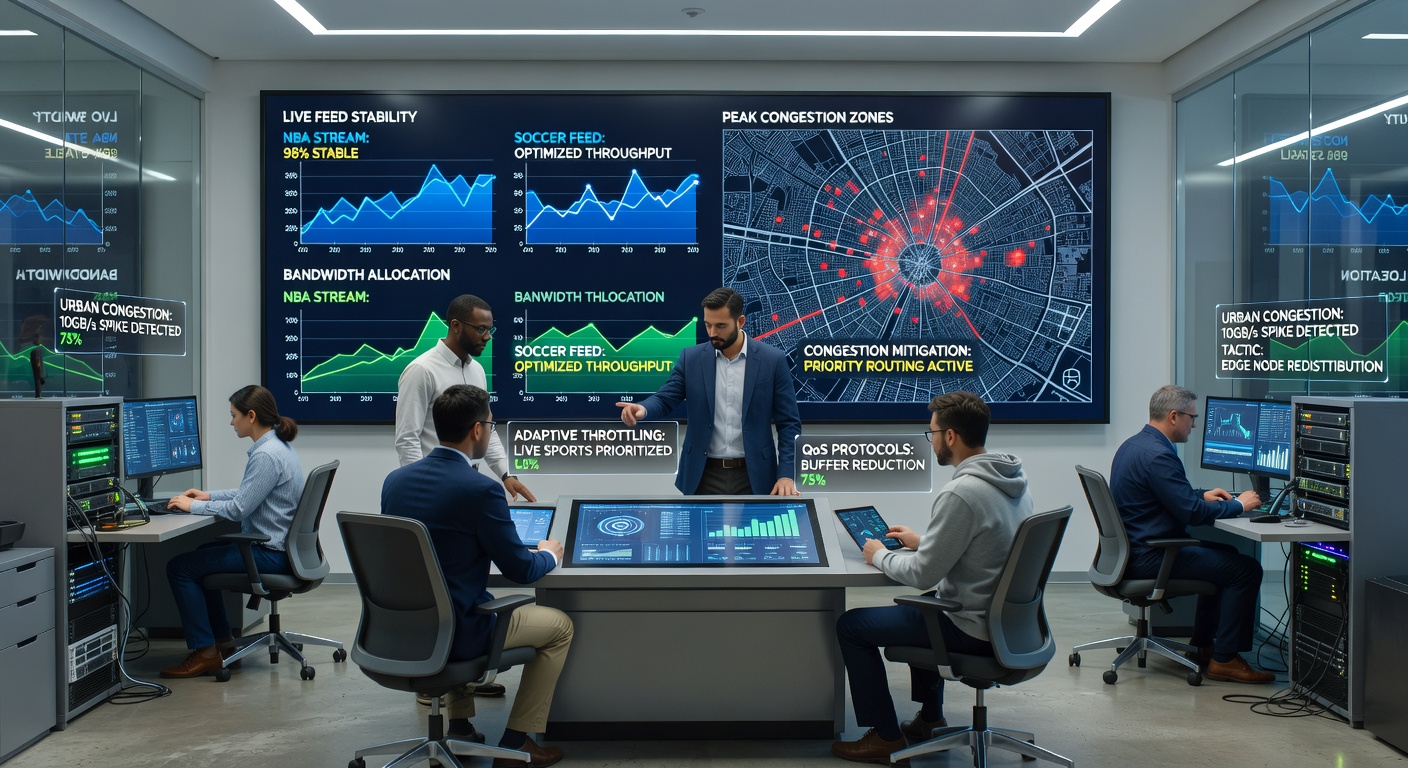
Edge computing installations process video encoding and transcoding tasks at facilities located within city boundaries rather than distant data centers, which shortens response times when congestion builds. These localized nodes cache popular game segments in advance and serve them directly to nearby viewers, reducing overall upstream bandwidth consumption during events in May 2026. Data from industry reports indicate that edge placements cut delivery delays by measurable percentages in high-density neighborhoods.
Traffic shaping algorithms monitor aggregate usage patterns across neighborhoods and apply temporary throttling to non-essential applications while preserving full capacity for streaming services. Municipal networks in various regions coordinate with internet service providers to implement these measures during known high-viewership windows, and the coordination prevents widespread degradation that could affect multiple simultaneous matches.
Monitoring Systems and Predictive Adjustments
Real-time monitoring platforms collect metrics on packet loss, jitter, and throughput from thousands of viewer endpoints, allowing operators to identify emerging congestion before it impacts feeds. Machine learning models analyze historical data from previous NBA playoffs and soccer tournaments to predict peak loads with increasing accuracy, and these predictions trigger preemptive resource allocation across the network. Studies conducted by academic institutions demonstrate that predictive models improve stream reliability when tested against urban event scenarios.
Multi-path transmission techniques send duplicate data streams over separate network routes, recombining them at the viewer device to compensate for losses on any single path during congestion events. This redundancy supports continuous playback even when individual routes experience temporary overloads common in city centers hosting large public viewing gatherings.
Conclusion
Bandwidth management combines adaptive protocols, distributed infrastructure, prioritization rules, and predictive analytics to sustain NBA and soccer feeds through periods of intense urban demand. Implementation of these tactics continues to evolve with network technology advancements, and coordination among providers, regulators, and content platforms supports consistent access for viewers worldwide. Data from sources such as the Federal Communications Commission and the Body of European Regulators for Electronic Communications provides ongoing benchmarks for evaluating these strategies across different regions.